October 2026
Engineers with Influence
Solving the big problems
If young people want to solve big problems, let’s show them how engineers solve big problems. That's the key takeaway from the latest Engineers with Influence roundtable.
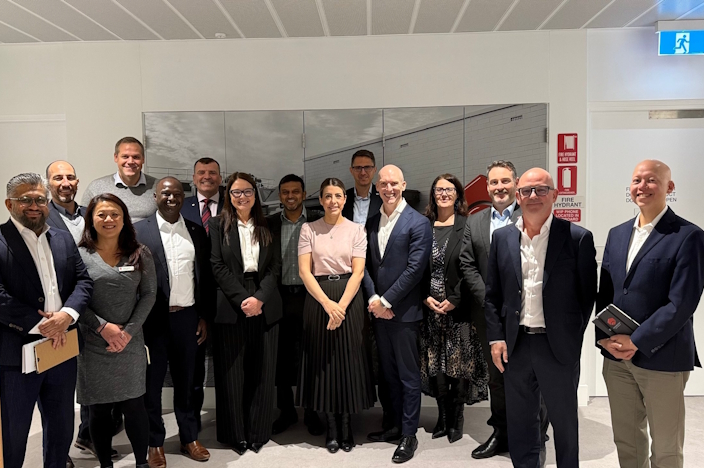
Hosted by Engineers Australia and Consult Australia in Perth on 1 October, the roundtable is part of an ongoing collaboration exploring how engineering expertise can achieve greater influence across business, government and the community.
Influence starts with a steady talent pipeline: attracting people to engineering, then giving them the breadth of skills and experience to shape decisions throughout their careers.
Setting the scene, Engineers Australia WA General Manager Adam Kinnest pointed to the “sheer scale” of the engineering task in Western Australia. The state’s $44.3 billion Asset Investment Program over the next four years is just one indication of what lies ahead.
Engineers Australia estimates Australia will need around 150,000 additional engineers over the next decade, while around 70,000 engineers are expected to retire. Yet just 8.5% of Australian graduates have an engineering qualification, the sixth-lowest proportion in the OECD.
For University of Western Australia Dean of Engineering, Professor Scott Draper, attracting more young people to engineering starts with something Australia has in abundance: big problems.
“What we see resonates with students is the [opportunity to contribute to] societal challenges: energy security, climate change, food security,” Scott said.
But there is a disconnect. Students can see how engineers tackle technical challenges one project at a time. Harder to see, Scott said, is engineering influence on the broader decisions, polices and systems that shape societies response to the challenges.
“Better communicating this broader influence, and the opportunity for engineers to help shape society’s future, could inspire more people to enter the profession.”
The engineering we don’t see
Engineers Australia WA Division President Allison Selman is Managing Director of subsea, pipeline and energy systems engineering firm Atteris. For Allison, the case for greater engineering influence rests on how engineers solve problems and why.
“We’re leaders in innovation, applying knowledge and technology to solve problems… But my biggest observation is that engineers are community focused. Our work delivers benefit to the Australian community.”
That focus is a powerful personal motivator, but it is often missing from the way engineering tells its story. The profession tends to show the physical proof – a bridge, tunnel, wind turbine or desalination plant – rather than the communities connected, protected or strengthened by it.
Engineers often assume the value of their contribution is “self-evident”, noted Consult Australia WA Committee Chair and WSP Co-Regional Director for WA Barry Moore. “We don’t often talk to other people about our work. We talk to other engineers.”
Many ways to grow
Employers are already looking for engineers who can do more than engineer.
A 2026 Australian study of 324 graduate mechanical engineering job advertisements found employers were not recruiting technical skills in isolation. Communication and teamwork appeared in more than two-thirds of advertisements, with project management and problem-solving also among the most sought-after skills.
“Engineers learn their technical skills at university and on the job,” said Zoe Maher, WSP’s WA Regional Executive for Rail and Consult Australia’s 2026 Emerging Leader award winner. “But there’s a missing part… the commercial acumen, governance, communication, knowing how to influence stakeholders.”
Developing influential engineers cannot wait until someone reaches senior management, Zoe suggested. Instead, early-career engineers should be encouraged to sit in executive and client meetings, participate in bids and business cases, and become involved in early planning. “Let them observe and absorb,” she said.
WSP’s in-house programs help early-career engineers navigate the profession, from communicating with confidence to positioning themselves for promotion. Mentoring and professional development can make career pathways more visible, Zoe said, and give people the impetus to pursue them.
But broadening an engineer’s skills does not have to mean steering them towards management. Western Power’s Head of Engineering and Design Andre Winarto pointed to the organisation’s engineering capability framework, which gives technical specialists another pathway to progress. “You can become a technical expert, and that can be celebrated.”
How big can engineering be?
There is another visibility problem at the opposite end of an engineer’s career.
Consult Australia CEO Jonathan Cartledge pointed to analysis of the backgrounds of the nation’s leading chief executives, published in the Australian Financial Review in July. Of the top 100 ASX-listed company CEOs, 23 had engineering qualifications. This was second only to business and economics (49), and ahead of law and science (8 apiece), and the arts (6).
Jonathan noted that engineering backgrounds often become less visible as careers progress – “they are a CEO, not an engineer who is a CEO” – even as the systems thinking and problem solving become more important.
Complex engineering problems need diversity of thought and expertise from outside engineering as well as within it, Aurecon WA Buildings Group Lead Shan Abeywickrema said. Engineering influence may be an engineer enabling a room full of different people to “reach into their curiosity” to solve a difficult problem together.
The discussion raised important questions for government. Infrastructure WA CEO Sonja O’Leary observed that, as Western Australia delivers a significant infrastructure program, engineering capability will support market capacity and effective delivery. Other specialist disciplines, such as finance and architecture, have senior roles that help maintain their influence, prompting consideration of how engineering expertise can best be supported across government.
From technical specialist to chief executive, engineering can open far more doors than young people may realise. To attract the engineers who want to solve big problems, we need to show them just how big engineering can be.
Want more insights from Engineers with Influence? Read how the conversation began, with engineering leaders asking why a profession that shapes so much of Australia’s economy and infrastructure is still under-recognised in the public imagination.