September 2026
Defence disposals: Putting the pieces together
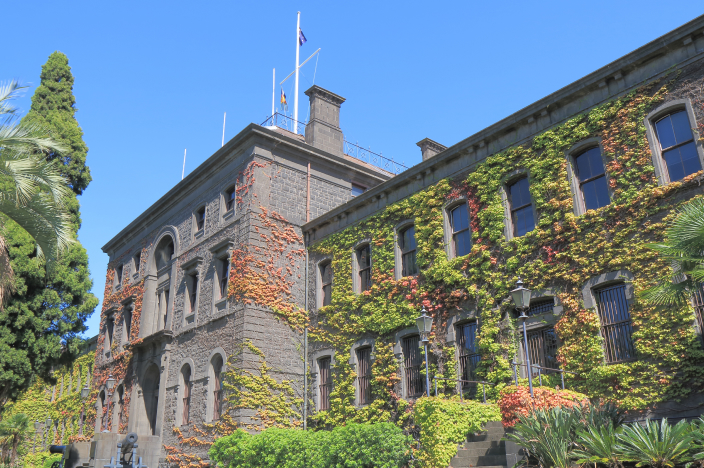
From contamination below ground to heritage above it, former Defence sites are puzzles no single discipline can solve. Stantec’s Leigh McDonald and Nick Glasson reveal what it takes to put the pieces together.
Australia’s Defence estate is the largest land holding in the Commonwealth, containing some of our most unusual pieces of real estate.
The numbers alone – 3.8 million hectares across 70 major bases, 100-plus training ranges, over 1,000 owned or leased properties and 30,000 built assets – don’t tell the full story.
A roll call of the 68 properties now earmarked for divestment includes barracks, rifle ranges and golf courses. There’s a high-frequency radio transmitting station, a former explosives factory, a railway line and coal-mining lease, a heritage hotel and holiday accommodation on Magnetic Island.
Some sites carry more than a century of history. Spectacle Island on the Parramatta River was originally a gunpowder store. Sydney’s Victoria Barracks, constructed by convicts between 1841 and 1846, was built for the British Army. In Darwin, the Stokes Hill Fuel Installation came under attack during Japanese air raids in the Second World War.
“No two Defence sites are the same,” says Leigh McDonald, Stantec’s Victorian Business Leader for Geosciences and Environment. “This wide and varied history of uses means there’s the potential for a range of issues on each site before it can be divested.”
The future changes the fix
Unlocking the potential of this Defence land is not as simple as putting up a “For Sale” sign.
The 2026 Defence Estate Audit Report identified potential sales revenue of around $3 billion. But it also estimated around $1.2 billion in upfront costs, including relocation, contamination remediation and heritage obligations.
Beneath the surface may lie the legacy of fuel, firefighting foams and decades of industrial activity. Think contaminated soil and groundwater, buried tanks, old services or discarded materials. Above ground, heritage buildings, mature landscapes and sensitive ecosystems can place their own constraints on what happens next. And beyond the fence, a city and community may have grown up around the site, bringing new roads, homes, businesses and communities with very different expectations about how the land could be used.
For Stantec’s multidisciplinary team, the first principle is that these issues cannot be solved one by one. The way a site is remediated affects what can be built; the master plan determines which areas need to be disturbed; heritage and ecology can reshape the developable footprint; and decisions about roads, drainage and other infrastructure also change the equation.
 “The scope of remediation should reflect the risks associated with the site’s proposed use. As a result, the nature of the future development is a fundamental consideration in determining remediation requirements,” Leigh says.
Nick Glasson, Stantec’s Project Director for Land Development, says this is why multidisciplinary thinking needs to enter the conversation early. “It’s not simply a matter of ‘how do we clean up this site?’. We need to consider what we are trying to create and the smartest way to get there.”
The jigsaw is the job
Some former Defence sites have taken decades to move from divestment to redevelopment. These are not simply land transactions with a few technical problems attached, Nick and Leigh note.
“They are complex redevelopment projects in which decisions made in one discipline can change the options available in another. It’s like putting together a jigsaw puzzle,” Nick says.
Stantec’s work at Tullamore in Melbourne shows what this looks like in practice. The 47-hectare former Eastern Golf Club was its own jigsaw: steep and varied topography, extensive mature trees and a sensitive ecology, heritage buildings, and complex stormwater requirements.
Working with Mirvac from feasibility and acquisition through to delivery, Stantec brought together civil, water infrastructure, geotechnical and traffic expertise to turn constraints into elements of the master plan. Open space accommodated blue and green stormwater infrastructure, significantly reducing downstream flooding and improving stormwater quality. An existing dam became an ornamental lake. The site’s landscape shaped its network of open space and walking and cycling connections.
Today, Tullamore is home to more than 900 residences, with almost 30% of the site retained as green open space. “The lesson is that the constraints, when understood together, open up new opportunities,” Leigh says.
“Remediation, planning, zoning, heritage, transport and infrastructure decisions interact. When these decisions are made sequentially, project teams can potentially waste money, lose years and diminish the value of the site.”
Stantec already brings together expertise spanning land development, contaminated land, planning, transport, water, buildings and infrastructure. Its recent acquisition of Niche Environment and Heritage adds around 200 specialists in ecology, heritage, natural capital and land restoration, taking Stantec’s environmental services team in Australia to approximately 450 people.
 “These Defence sites were designed for a very different purpose, often many decades ago. The opportunity now is to look at what the communities around them need today, and how the land can be remediated and repurposed to deliver that. That takes an understanding of what’s there now and a vision for what each site could become,” Leigh concludes.
If you’re considering the future of a complex site, talk to Stantec about bringing the pieces together early.