September 2026
25 years of reinforcing confidence
Strength in certification
Steel supply chains have changed dramatically since Consult Australia helped establish independent steel certification 25 years ago. Confidence in the steel used in Australian buildings and infrastructure matters even more today.
Consult Australia was a founding member of the Australasian Certification Authority for Reinforcing and Structural Steels (ACRS), established in 2001 to provide independent certification that reinforcing and structural steels meet the relevant standards.
This assurance is increasingly important as supply chains have diversified with a mix of locally produced and internationally sourced structural steel.
Infrastructure Australia’s 2025 Market Capacity Report found domestic steel fabrication capability is a “potential sovereign supply chain risk”. Imported fabricated steel is often priced up to 50% below what local producers can viably offer, with import volumes up 50% in recent years.
The Australian Steel Institute (ASI) finds imported steelwork is undercutting local prices by an average 36.8%. The ASI says the local sector supports 20,000 jobs.
“Consult Australia members have raised concerns about what the loss of local fabrication capability and jobs could mean for Australia’s engineering sector,” says Irene Scott, Executive Director and Senior Principal Engineer at pitt&sherry, who has represented Consult Australia on the ACRS Board since 2022.
“When imported steel arrives without clear, independently verifiable evidence of compliance, engineers can be left doing additional work to establish that it meets the required standards. That can add time and cost to a project and shift risk further down the supply chain.”
Possible safeguards for fabricated structural steel are being investigated by the Productivity Commission. Its September interim report found some firms and market segments are under pressure, but stopped short of recommending tariffs or other trade barriers.
Confidence from the start
ACRS provides independent, third-party certification that steel products comply with the relevant Australian and New Zealand standards, whether they are manufactured locally or imported.
“Our role is not to protect one source of supply over another, or to advocate for domestic production as a commercial preference,” says ACRS Executive Director Dr Andrew Wheeler. “It is to ensure engineers, builders, regulators and procurers can have confidence that steel supplied to projects is traceable, independently assessed and fit for its intended use.”
This starts with specification. Andrew says rigorous, independent third-party certification should be specified at the design stage and carried through subsequent contracts.
“Where certification is absent, incomplete or difficult to verify, the cost and risk of demonstrating compliance unfortunately shifts onto designers, builders, certifiers and clients.”
Consistency across borders
Certification requirements also vary between states and territories, creating another layer of complexity for engineering teams working across jurisdictions.
“Some states and territories require third-party structural certification, but not all,” Irene notes. “For example, South Australia requires certification for structures, but obtaining the information needed can be difficult and time-consuming.
“Greater consistency would make it easier for project teams to understand what evidence is required and reduce the need to establish compliance retrospectively.”
ACRS supports a nationally consistent approach.
“It would help reduce uncertainty, improve confidence in construction materials and avoid duplication of effort where parties must retrospectively prove compliance for materials that could have been specified and verified at the outset,” Andrew says.
Consult Australia will continue to work with ACRS and advocate for a nationally-consistent approach to steel certification and traceability.
Members can also help strengthen the evidence behind this advocacy. If the various certification requirements between jurisdictions is a compliance risk to your projects – or affecting the engineering work undertaken in Australia – please contact Kristy Eulenstein, Head of Policy and Government Relations.
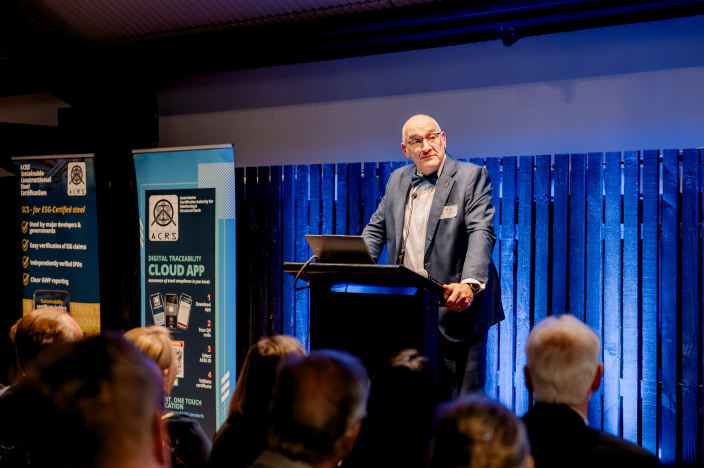
Image: Dr Andrew Wheeler, Executive Director, Australasian Certification Authority for Reinforcing and Structural Steels.