October 2026
Looking out for our MATES
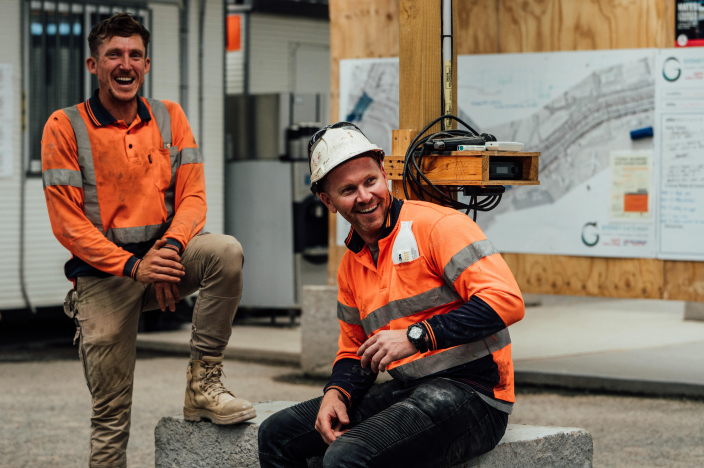
After nearly 20 years tackling suicide in construction, MATES has reason for optimism. Founding CEO Jorgen Gullestrup reflects on the progress, the research and the work still ahead.
There is some encouraging news in the construction industry’s long battle against suicide.
Research published by the University of Melbourne in 2025 found that suicide rates among Australian male construction workers have fallen substantially over two decades.
Nationally, the suicide risk of male construction workers relative to other employed men dropped from 2.34 times in 2001-03 to 1.55 times in 2019-21. In Queensland, where MATES began, the rates have almost converged.
MATES in Construction founding CEO Jorgen Gullestrup is careful not to claim the credit.
“We don’t call it a causal relationship,” he says. Instead, he describes it as a “happy coincidence” – a welcome serendipity alongside the industry’s growing commitment to suicide prevention.
But there is no question that MATES has placed suicide prevention on the construction industry’s agenda. From its Queensland beginnings, MATES has grown into a national program with a presence in New Zealand, expanded into adjacent industries including mining, manufacturing and energy, and mobilised tens of thousands of workers to look out for one another.
In 2021, the World Health Organization highlighted MATES as an international example of best practice in workplace suicide prevention.
It's an extraordinary achievement, and one Consult Australia is proud to support.
More than a conversation
Since 2008, MATES has grown into an industry-wide suicide prevention program combining workplace training, peer support, crisis intervention and research.
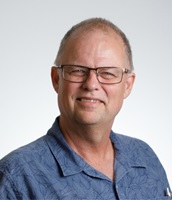
“We are not actually a mental health organisation working in the construction industry. We are a construction organisation working on mental health within our industry,” Jorgen says.
Through MATES’ on-site general awareness talks, workers learn to recognise when colleagues are struggling and how to connect them with help. Trained volunteers provide additional support, backed by a 24/7 helpline and case management services.
By 2022, an estimated 37% of Queensland’s construction workforce had attended MATES’ general awareness talk. Today, more than 335,000 people have engaged across both sides of the Tasman.
MATES’ Blueprint for Better Mental Health and Suicide Prevention also helps employers address psychosocial hazards, reduce stigma, improve access to support and help people return to work after mental health challenges.
But Jorgen believes mentally healthy work is about more than managing risks. It’s also about finding meaning in what we do.
Anyone who has worked in the built environment knows the impossibility of passing a completed project without pointing it out to their travelling companions, Jorgen observes.
“We have such a strong connection to the projects we have worked on. And that’s not because we are attached to the bricks and mortar. It’s because we are attached to the social purpose. It’s pride in people driving on the bridge or using the library or being cared for in the hospital.”
Putting research to work
Research is central to the MATES model, and each year the organisation offers a $130,000 PhD scholarship to investigate mental health and suicide prevention in construction and other male-dominated industries.
Current research explores subjects ranging from suicide among female construction workers to the challenges medium-sized businesses face in managing psychosocial hazards.
Jorgen has recently completed his own PhD, investigating why some 35,000 workers voluntarily take responsibility for looking after their colleagues. His findings point to the importance of relationships, a shared industry identity and networks that give people the confidence to offer help.
Those relationships extend beyond the site fence. During his research, Jorgen interviewed a union delegate who noted that office-based professionals might enjoy more comfortable working conditions than their on-site colleagues but sometimes lacked the camaraderie that could help them through mental health challenges.
“We are one tribe, one community,” Jorgen says. It’s a philosophy Consult Australia shares. Through the annual CollabX forum with the Department of Defence, Consult Australia contributes $5,000 to support MATES’ work.
This commitment sits alongside Consult Australia’s Mental Health Knowledge Hub, which brings together practical tools, resources and industry case studies to help consulting businesses create mentally healthier workplaces.
Whether working on site or in an office, designing infrastructure or delivering it, the principle is the same: looking after the people who make our industry possible is everyone’s business.
“We’re all part of the construction industry, whether we’re designing buildings, engineering them or delivering them. Looking after each other should be as much a part of what we do as making sure projects are safe, on time and on budget.”
Learn more about MATES’ suicide prevention programs, research, workplace resources and PhD scholarships at mates.org.au.
If you or someone you know is struggling, contact Lifeline on 13 11 14 or the MATES 24/7 Helpline on 1300 642 111 for confidential support.