November 2026
Spot the hazard, design it out
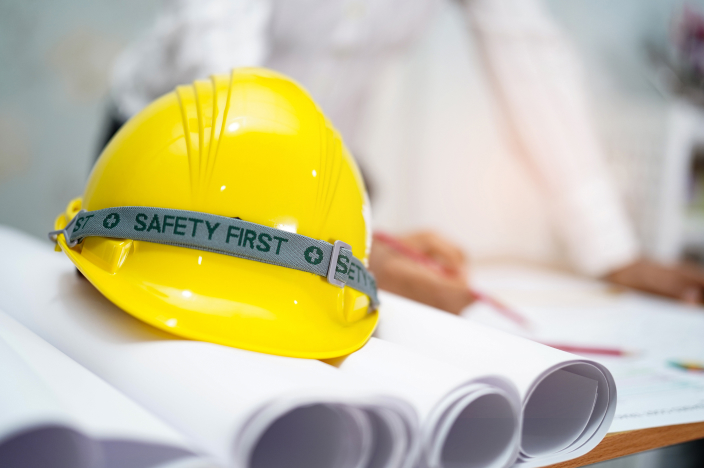
Humans aren’t as good at spotting hazards as we think. Research shows the right tools and training can help. Consult Australia’s returning Safety in Design course explores how to reduce risks through better design.
After an 11-year hiatus, Consult Australia is reintroducing its Safety in Design for Consultants course in 2027, responding to renewed demand from members.
And for course trainer Mike Hurd, the growing interest is timely. Safety in Design requirements are becoming more prominent in contracts, yet it may not always be clear what clients actually want.
Research suggests there is good reason to invest in Safety in Design skills. A 2016 American study, for instance, found that people identified, on average, just 42% of hazards. But this figure jumped to 77% after targeted training in systematic hazard recognition.
Another study, also published in 2016, found that practitioners identified around half of the construction hazards from design documents. A simple, systematic hazard-identification technique improved their performance by an average of 27%.
For Mike, founder of engineering consultancy ESM and an experienced Safety in Design specialist, the research reinforces an important lesson: identifying hazards is a skill that can be developed with the right tools and techniques.
“By using hazard identification tools, and by collaborating with other stakeholders, we can significantly improve the number of hazards identified in design, and fix them while it is still cheap to do so,” he says.
Knowing what to look for
Consult Australia’s one-day Safety in Design for Consultants course aims to help engineers, architects and other consulting professionals understand their responsibilities and put the principles into practice.

“Safety in Design is a common term, and people assume they know what it means,” Mike says. “But there isn’t a single code of practice or standard that tells you exactly how to undertake Safety in Design work.”
During design, a solution to a hazard might be straightforward: a ramp instead of steps, a handrail or guardrail, an electrical interlock or emergency stop.
“Hazard controls are not usually astounding. Sometimes the gaps in knowledge are more astounding than the actual safeguards people eventually put in place.”
Putting safety into practice
Consult Australia’s course will explore what clients expect of consultants, the tools and techniques available to identify hazards, and how to plan, document and report on Safety in Design activities.
Participants will also learn what makes an effective Safety in Design workshop, where stakeholders come together to identify potential hazards and consider how they can be eliminated or managed.
A practical case study will give participants the opportunity to develop a Safety in Design plan, consider costs, participate in a simulated workshop and document decisions in a hazard register.
Mike brings decades of experience to the course, including 17 years in the United Kingdom’s nuclear industry, where he developed his expertise in engineering safety. A control systems engineer by training, he has since applied this knowledge across a range of sectors. His consultancy, ESM, has delivered Safety in Design training since 2014 and now has four specialist trainers.
“The key is knowing what to look for and having the right tools and people around you to identify hazards before they become problems,” Mike concludes.
Safety in Design for Consultants
Consult Australia’s practical, one-day course will be held in Sydney in 2027, facilitated by Mike Hurd of ESM.
Wednesday 17 March 2027, 9am–5pm Find out more and register
Wednesday 9 June 2027, 9am–5pm Find out more and register