March 2026
The case for positive change
Jonathan Cartledge, Chief Executive Officer, Consult Australia
“It is a capital mistake to theorise before one has data.” So said Sherlock Holmes. At Consult Australia, we are not so different from the world’s most famous fictional detective. We know making the case for positive change starts with evidence.
Several developments this month confirm my theory.
Take the new Meeting Positive Duty report released by the Consult Australia
Champions of Change group. Eleven CEOs chose to share sexual harassment data collectively to establish a sector-wide baseline.
It’s courageous work. Sensitive issues can be difficult for individual organisations to talk about internally, let alone publicly. But by aggregating data, we can better track progress and focus our efforts where they will have the greatest
impact.
This month’s Consulting Matters highlights two more examples of evidence. The COSBOA Small Business Perspectives Survey, which we encourage relevant members to complete, will inform advocacy on issues that matter to many consulting
firms. Meanwhile, the Infrastructure Australia Priority List tells us where investment is likely to be directed over the next decade. Less guesswork, more impact.
Not all evidence is discovered in reports and datasets. The most powerful evidence often surfaces in conversations.
This was my experience last week, as Consult Australia and the Department of Defence hosted two days of intense discussion at CollabX. The official panels and
keynotes framed the conversations, but the most powerful lived experiences were shared during the breakout chats and networking.
The same dynamic played out in our joint workshop with our large firms and the Australian Constructors Association. As CEOs compared notes, they realised many of the pressures aren’t isolated problems but systemic ones across the value chain.
Yet more data points.
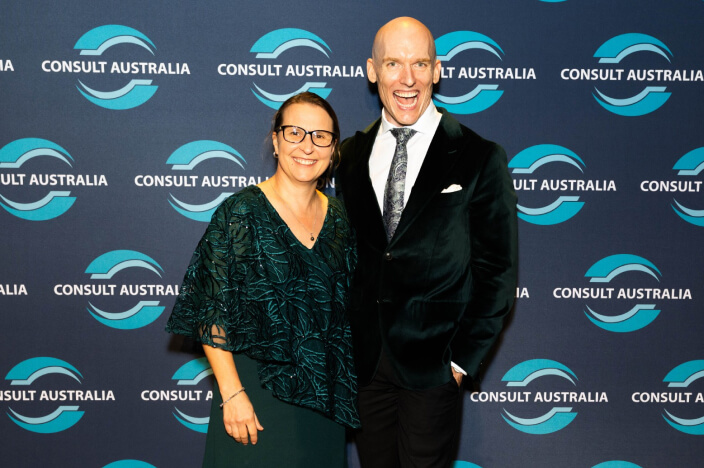
And if you were at this month’s Consult Australia Awards for Excellence,
you could feel the proof in the room. The energy was electric, and the genuine delight people felt in receiving peer recognition was humbling. The awards celebrate more than individual achievement; they are also evidence of what our industry
values: collaboration, sustainability, innovation and diverse leadership.
Sherlock Holmes knew that evidence is rarely revealed in one neat clue. It emerges piece by piece. We might not wear deerstalkers at Consult Australia, but the method still applies: gather the evidence from many sources and the case for positive
change becomes impossible to ignore.