March 2026
Minimum viable capability unpacked at CollabX
Defence delivery under constraint
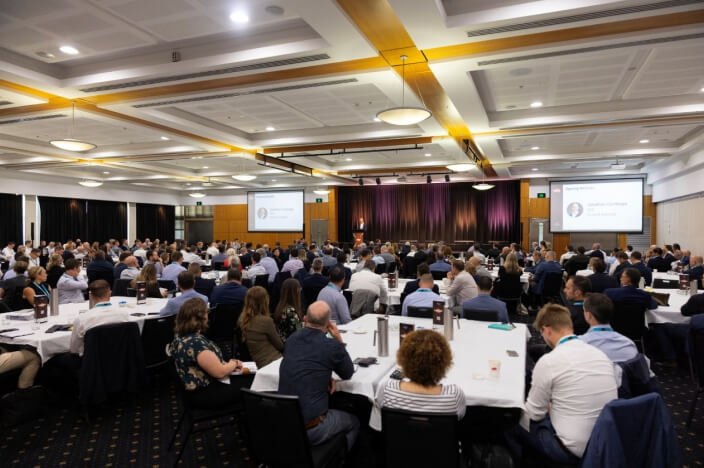
CollabX, held in Canberra last week, articulated a clear message: Defence projects must be delivered within limits, and “minimum viable capability” is demanding a new kind of partnership with industry.
The fifth annual CollabX conference brought together engineering and design consultants with contractors and the Defence’s Security and Estate Group, responsible for delivering essential defence and security infrastructure with a budget exceeding $45 billion over the next decade.
Across two days of sessions, presentations from the Australian Submarine Agency, Estate Service Delivery, the Indo-Pacific Branch, Infrastructure Australia, Defence NT and Defence West, painted a consistent picture. Defence has moved into execution and the system is being tested under real delivery conditions.
Celia Perkins, Deputy Secretary for Security and Estate, set the tone early, describing the scale and complexity of the Defence estate alongside mounting budget pressure, supply chain disruption, insurance constraints and the need for stronger cost discipline.
Later sessions reinforced the scale of the delivery challenge. Nuclear submarine infrastructure alone was described as “next level”, with more than $60 billion in capital works ahead.
Other speakers – including First Assistant Secretary for Infrastructure, Pat Sowry, Director General of Estate Service Delivery Brigadier Gabrielle Follett, and First Assistant Secretary for Henderson Consolidation with the Naval Shipbuilding and Sustainment Group, Luke Parsons – reinforced strong partnering as a competitive advantage.
A theme across the conference was industry as “a key component of Defence capability,” Consult Australia President Natalie Muir observed in the closing session. Industry is “not a supplier, but a strategic partner. The delivery ecosystem is critical and everyone in this room is part of that.”
No gold-plated solutions
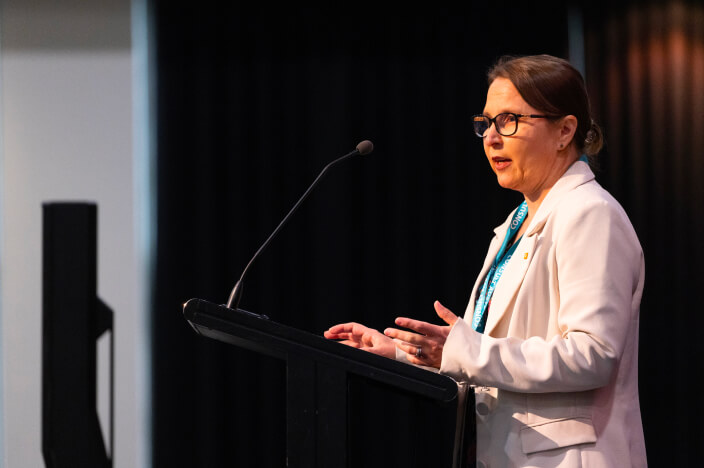
Minimum viable capability, or MVC, emerged as a defining concept.
In simple terms, MVC means delivering the level of capability required to achieve the outcome – no more, no less – within real constraints of time, cost and capacity.
As Natalie Muir noted, Defence is not seeking “gold-plated solutions” but “infrastructure that is functional, resilient, affordable and built for the future”.
MVC is not about lowering standards or cutting corners. It is a direct response to reality: a significant pipeline of work, constrained workforce and supply chains, pressure on budgets, and urgency around capability.
But MVC also shifts responsibility, the audience heard. The role of industry partners is not just to deliver scope, but to test and refine it. This requires earlier conversations, “clear strategic intent, accurate cost forecasting and a shared discipline around scope from the outset,” Natalie noted.
A culture shift – and a mindset one – is required to bring thinking to the system level, rather than product or project level.
“These themes align with Consult Australia’s advocacy pillars of people, productivity and procurement. The conversations we’ve had here [at CollabX] will be valuable in shaping our advocacy agenda.”
An enduring collaborative exchange
CollabX 2026 lived up to its name as a collaborative exchange. “Collaboration drives value, resilience and capability,” Natalie said. “And at the heart of that is communication. More conversations, more frequently.”
We will bring more reflections from the conference in future editions of Consulting Matters. Stay tuned as this agenda progresses with the next iteration of the National Defence Strategy and the Integrated Investment Program due in the months ahead.