August 2026
Stop analysis paralysis. Start scaling success
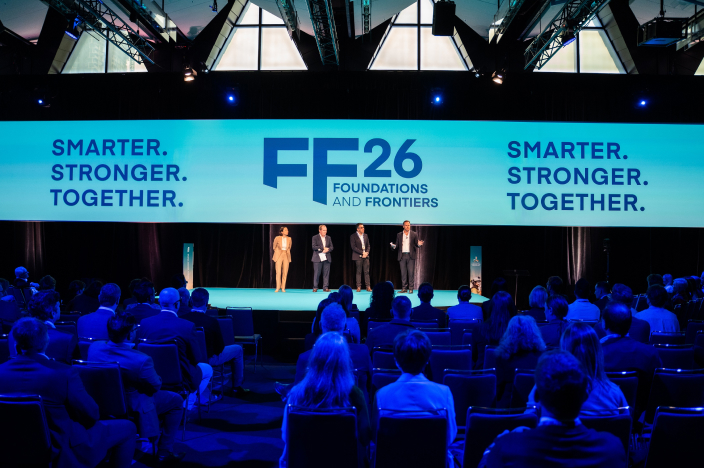
Australian Constructors Association CEO Peter Colacino reflects on a central challenge from Foundations and Frontiers 2026: Australia’s construction industry already knows what works. The task now is to scale it.
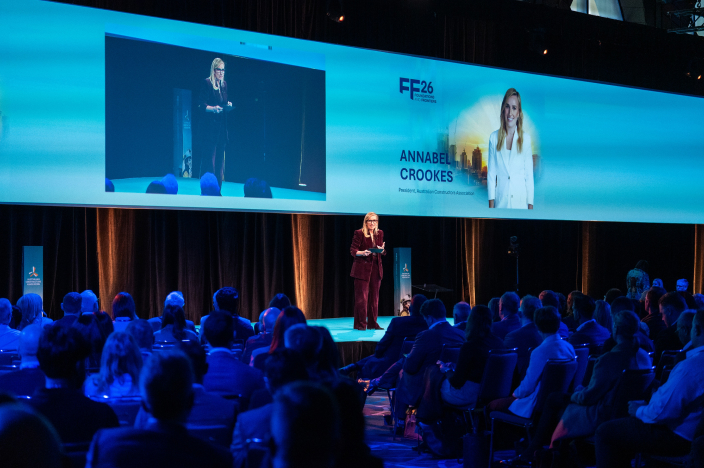
At Australia’s national construction forum Foundations and Frontiers 2026, ACA President Annabel Crookes put this challenge to the industry: stop spending so much time talking about what’s broken and start paying closer attention to what’s working.
For years, construction has been defined by conversations about productivity challenges, skills shortages, contracting disputes, culture, industrial relations and rising costs.
These are real issues, and they deserve our attention. But no industry improves by focusing only on its problems. Annabel, Laing O’Rourke’s Director of Legal and Risk, challenged us to look more closely at the projects, teams and organisations already achieving better outcomes and ask what we can learn from them.
That idea shaped the conversations throughout Foundations and Frontiers.
Rather than revisiting familiar constraints, the forum focused on identifying the projects, organisations and approaches already delivering better outcomes, and understanding how to replicate them at scale. Annabel called them ‘positive deviance’ – projects operating under the same market conditions, facing the same constraints and pressures as everyone else, yet achieving remarkably different results.
We don’t have a shortage of reports, reviews or reform agendas. What we need is a better understanding of why some projects consistently deliver better outcomes than others, and how we make those approaches standard practice. As Annabel said, best practice cannot remain exceptional practice. It must become normal practice. Across every session, one message kept coming through. Australia doesn’t have an ideas problem; it has a scaling problem.
One of the most compelling contributions came from Annabel’s colleague at Laing O’Rourke, Europe Hub Operations Director Mike Lewis, who challenged the audience to look at Australia’s construction sector differently. As Mike pointed out, we’re already doing many of the things needed to improve productivity. Across the country, projects are embracing offsite manufacturing, digital engineering, prefabrication and modern methods of construction. We’re seeing innovation in design, planning and delivery. The problem is that too much of it remains isolated.
As Mike observed, Australia has pockets of innovation spread across different projects, different organisations and different parts of the supply chain. What’s missing is the ability to bring those pockets together and apply them consistently at scale.
The challenge isn’t discovering what works – it’s scaling it. That requires confidence from clients, courage from contractors and procurement models that reward innovation rather than simply transferring risk. It requires stronger collaboration across the supply chain and a willingness to move beyond established ways of working. As Mike told the audience, “We’ve got to be braver than what we are today.”
That broader theme was reinforced by the participation of NSW Treasurer Daniel Mookhey, who joined industry leaders to explore how government and industry can work together to improve productivity and deliver the enormous pipeline of housing, infrastructure, energy and defence projects ahead. Meeting that challenge won’t be achieved by working harder alone. We need to work smarter and that means learning from success.
Perhaps the strongest example of that lesson came later that evening. Following Foundations and Frontiers, industry leaders gathered for the presentation of the 2026 Australian Construction Achievement Award, Australia’s highest honour for construction excellence.
The winning project represented exactly the kind of positive deviance the forum had been discussing. Multiplex’s ECU City Campus transformed one of the most constrained construction sites in the country into a landmark university precinct above live rail tunnels and the Perth Busport, while maintaining transport operations throughout construction.
It was a project of extraordinary technical complexity, but what impressed the judging panel was the project’s ability to deliver exceptional outcomes across every measure. The project reduced structural steel requirements by approximately two-thirds through innovative redesign. It supported 122 apprentices and trainees, directed more than 95% of project expenditure to Western Australian businesses and awarded $32 million in work to Indigenous enterprises. It delivered engineering excellence while creating economic, workforce and community value.
The lesson from both Foundations and Frontiers and the Australian Construction Achievement Award is that Australian construction does not suffer from a shortage of excellence. Across the country, teams are finding better ways to design, procure and deliver projects. They are building stronger cultures, embracing modern methods of construction, strengthening collaboration and creating better outcomes for the communities they serve. The challenge now is ensuring these successes do not remain isolated examples.
As Annabel reflected in her final Foundations and Frontiers forum as ACA President, real progress begins when we become curious about success.
Why did it work?
What conditions made it possible?
What was done differently?
And most importantly, how do we replicate it?
If Australia is serious about lifting productivity and delivering the housing, infrastructure and energy projects our future depends on, we need to spend less time asking what is wrong and more time scaling what is right.
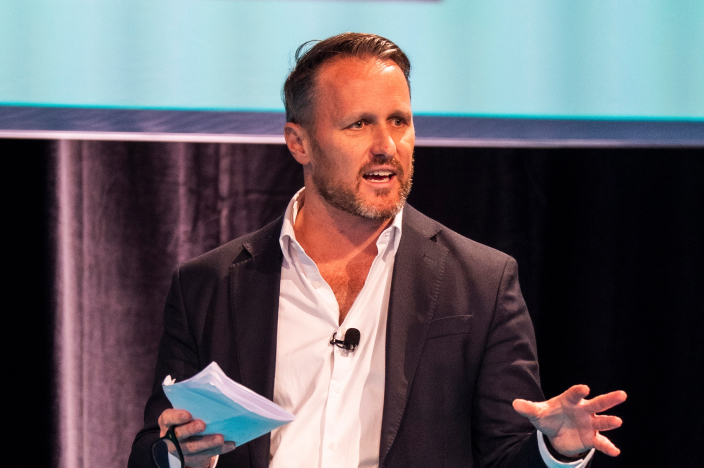
About the author
Peter Colacino is Chief Executive Officer of the Australian Constructors Association. His experience bridges the entire project lifecycle from strategic policy through to project delivery and operations. Previous roles have included NSW Project Strategy and Delivery Leader for Mott MacDonald and Chief of Policy and Research at Infrastructure Australia.