April 2026
A problem we can’t solve later
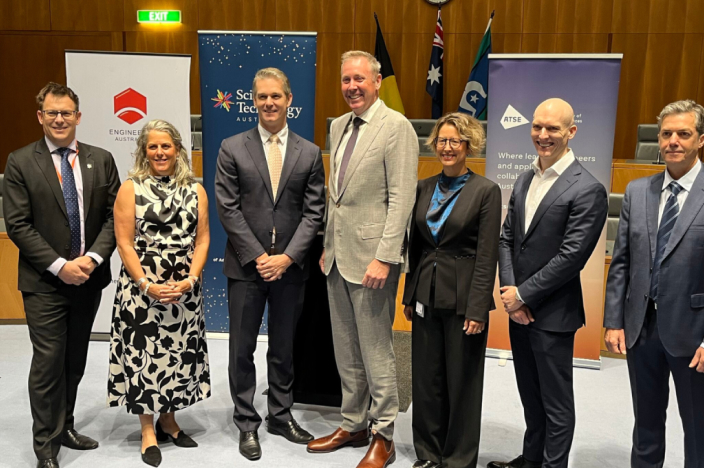
Parliamentary Friends of Engineering. Photo by AUSPIC.
Maths in Schools Roundtable
Just 8.4% of Year 12 students study advanced mathematics. This figure is a fault line running beneath Australia’s future engineering workforce – and influences our ability to deliver increasingly complex infrastructure, energy and defence projects.
The Parliamentary Friends of Engineering recently hosted a Maths in Schools Roundtable to address Australia’s declining participation in advanced mathematics.
The consensus from the political, education and industry leaders present was clear: Australia’s ability to deliver on its infrastructure, defence and energy ambitions depends on advanced maths.

“Without a significant increase in students pursuing maths, we cannot grow the next generation of engineers. This has dire consequences for the nation, with engineering underpinning around 60% of our nation’s [gross domestic product],” Engineers Australia’s Chief Engineer Katherine Richards AM said during the Roundtable.
The gender imbalance adds another layer, roundtable participants heard. Female participation in higher mathematics has fallen to 5.9%, compared with 11% for male students. This gap has barely shifted in more than a decade.
“Advanced maths prerequisites are required for 60% of engineering degrees. As global demand for engineers increases, we need record levels of students taking advance maths. Instead, we are seeing record lows,” notes Consult Australia’s Chief Executive Officer, Jonathan Cartledge.
“A shrinking domestic pipeline of engineers places pressure on project delivery, increases competition for talent and limits the sector’s capacity to respond to growing demand for complex, multidisciplinary solutions.”
Among the solutions explored, each focused on building the future engineering pipeline, were:
- Reframe advanced maths as sovereign capability. Students, parents and policymakers need to understand maths as essential to the nation’s ability to design, build and maintain the systems we rely on.
- Invest in teachers as the lever for change. Coordinated workforce planning and sustained investment are needed to address the structural shortage of qualified teachers and strengthen professional development.
- Close the access gap. Inequities in access are a systemic design flaw, requiring targeted interventions for students in regional, low socioeconomic and First Nations communities.
- Redesign how maths is experienced, not just how it is taught. Participation is shaped by confidence and identity, as much as it is by ability. Flexible entry points, varied learning pathways and teaching approaches can shift maths from a subject students opt out of early to one they can re-engage with over time.
- Strengthen school–industry–university links. Closer collaboration between industry and education is critical to making engineering visible and tangible. Exposure to real-world projects, client challenges and career pathways helps students understand where maths leads and can build a more work-ready, future-focused talent pipeline.
The Parliamentary Friends of Engineering was established in September 2025 by Engineers Australia, the Australian Academy of Technological Sciences and Engineering (ATSE), Consult Australia, Australian Council of Engineering Deans and Science and Technology Australia. The group aims to elevate engineering and the critical role it plays in nation-building and productivity.
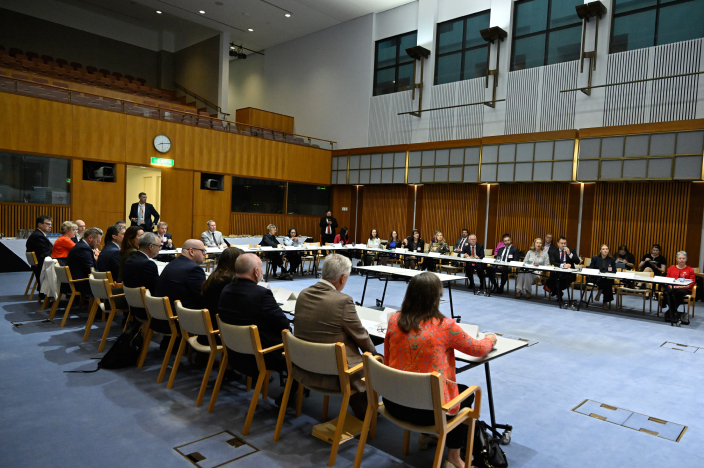
Photo by AUSPIC
“Whether it’s designing bridges or balancing our complex energy grid, advanced maths underpins Australia’s infrastructure and our ability to deliver it,” Jonathan notes.
“Without change, our sector won’t have the capacity to meet future demand. Coordinated action across schools, industry and government can ensure more students access and succeed in advanced maths. The roundtable showed a genuine willingness to move forward together.”